Chemical-Resistant Membranes
PVC or KEE sheets near fans that vent oils, fats, or solvents, chosen from the manufacturer's chemical-resistance chart.

As a Bowling Green industrial roofing contractor, we reroof plants, mills, and distribution buildings section by section, with membranes chosen for each roof's exhaust and traffic.
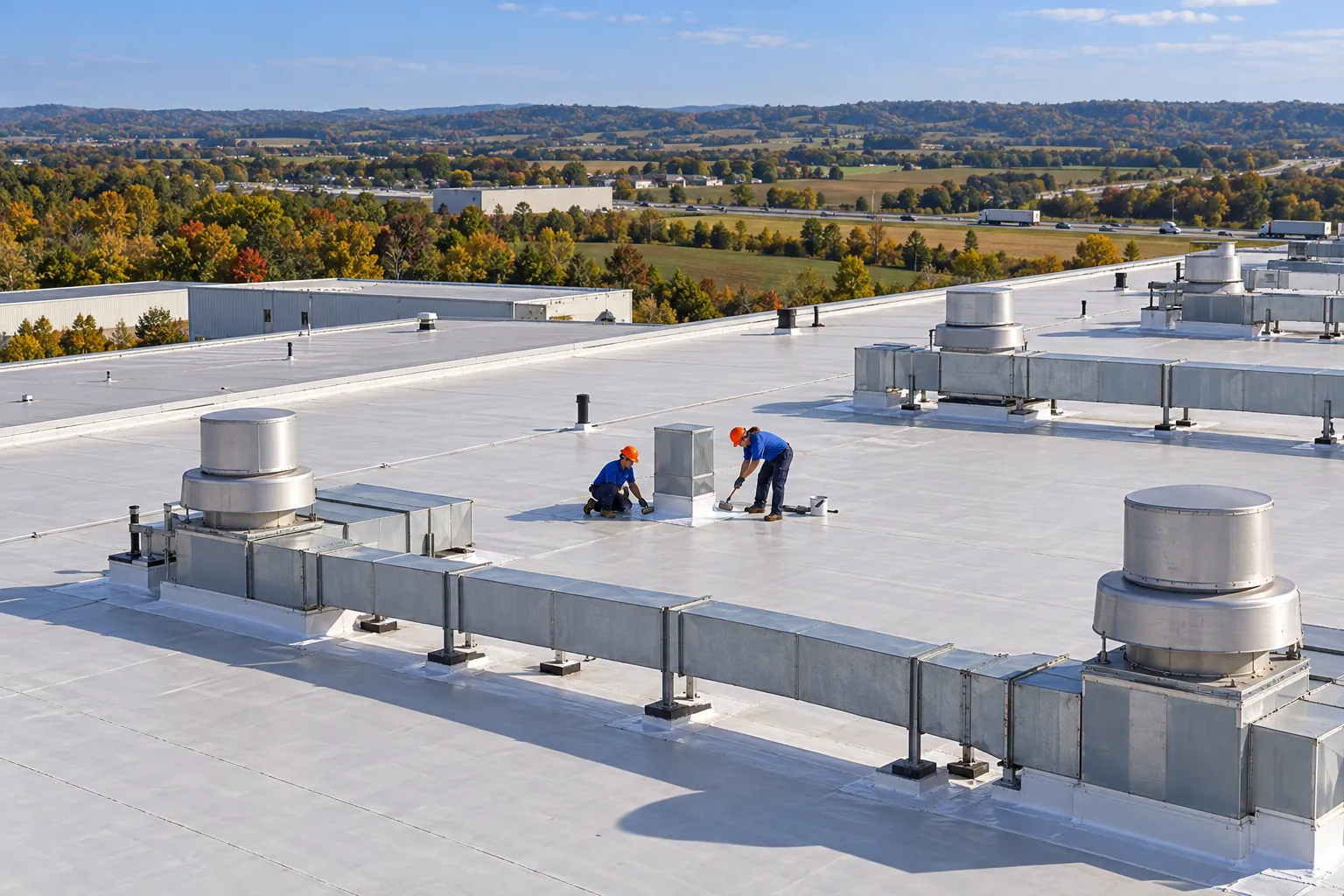
As a Bowling Green industrial roofing contractor, we plan for loads a standard reroof never sees. These rows show which work each condition points to.
| If Your Plant Roof Shows | Membrane Change | Walkways And Supports | Drainage Rework |
|---|---|---|---|
| Grease or oil buildup around exhaust fans | Usually Fits | Sometimes | Rarely |
| Worn paths and punctures between the hatch and units | Rarely | Usually Fits | Rarely |
| Water sitting hundreds of feet from the nearest drain | Rarely | Rarely | Usually Fits |
| Crushed insulation under heavy rooftop units | Sometimes | Usually Fits | Rarely |
| Overflow at the parapet during heavy rain | Rarely | Rarely | Usually Fits |
| Gas lines and conduit resting on the membrane | Rarely | Usually Fits | Rarely |
The manufacturer's chemical-resistance chart settles the membrane once we know what each fan vents.
Plant roofs take heat, exhaust, and traffic every day. These signs show where that wear lands first.
Dark runoff at the roof edge below exhaust stacks means residue is collecting on the membrane and washing off in rain.
Crane or hoist lifts over the edge can crush coping or edge metal, which shows from the ground as a bent line.
Long eave runs on large buildings overflow when downspouts near the loading docks get crushed.
Water over a line or rack often starts at a curb or pipe support many feet away along the deck.
Humid process areas push moisture into the roof from below where a vapor retarder is missing.
Makeup air and exhaust unit curbs see vibration that cracks sealant and loosens flashing over time.
EPDM near a grease fan swells and softens, and that soft patch is where the next puncture starts.
Scuffed membrane from the hatch to each unit marks a service route that needs walkway pads or pavers.
Crushed insulation under rooftop units with no rails or curbs shows as dips that hold water.
Each option targets a load the plant puts on its roof, from exhaust above to production below.
PVC or KEE sheets near fans that vent oils, fats, or solvents, chosen from the manufacturer's chemical-resistance chart.
Walkway pads on routes from the roof hatch to equipment, and pavers on pedestals in high-traffic service areas.
Rails and curbs under units and fans spread point loads, and supports lift gas lines and conduit off the membrane.
Added drains, overflow scuppers, crickets, and tapered insulation carry water across hundreds of feet to each sump.
Tear-off and installation in small sections that are dried in before crews leave, with temporary tie-ins at each day's edge.
Containment boxes under kitchen and process exhaust fans keep buildup off the membrane around them.

Industrial roof work protects production first. These are the gains when the roof is built for the loads it carries.
Small sections dried in each day keep water off finished and open areas alike while the floor keeps running.
Matching the sheet to what the fans vent prevents the swelling and softening grease causes on the wrong membrane.
Walkway pads and pavers give trades a set path, so boots and tool carts stay off the open membrane field.
Extra drains and tapered slope keep ponds from parking against curbs far from the nearest outlet.
An access log at the roof hatch ties damage to a date, which helps when outside trades work on the roof.
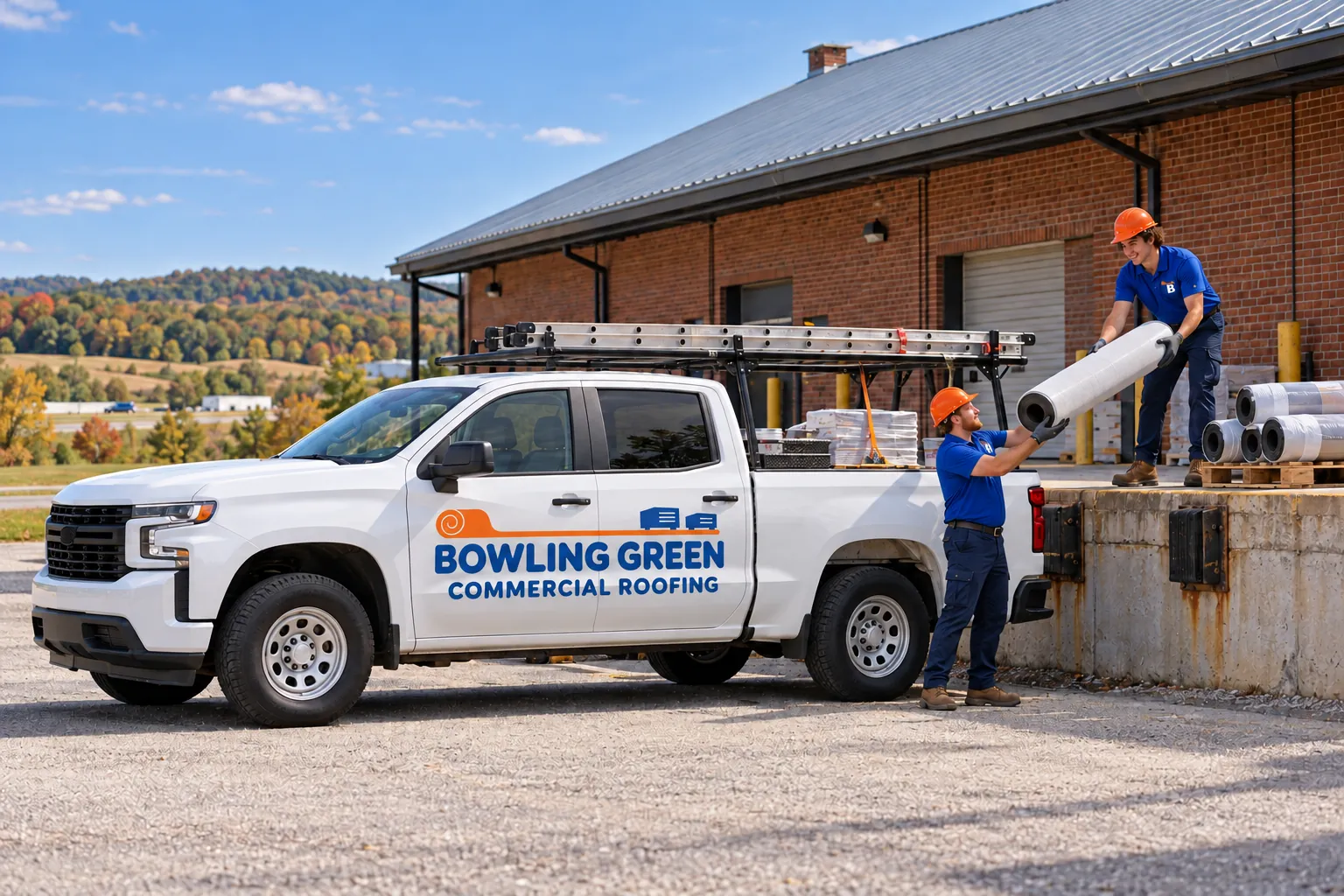
Call us with the line location and what sits on the roof above it. We find the entry point and plan repairs around your shifts.
Plant reroofs are planned around production, shipping, and air intakes before the first section opens.
We walk the roof with your facilities lead, note every fan, stack, unit, and drain, and identify what each exhaust puts on the membrane.
Sections, unit shutdowns, and crane lifts get scheduled around shifts, shipping traffic, and the makeup air units near each work area.
Dust and debris controls go up under each open roof section, and a fire watch is posted wherever adhesive or hot work sits near intakes.
Each section is torn off, its deck checked, and new insulation and membrane set before crews move on, with tie-ins at day's end.
Walkway pads, pavers, equipment rails, and pipe supports go in, and the finished roof is walked with you against the plan.
Large buildings often carry more than one roof system. These services cover the rest.
White TPO suits large warehouse roofs with light exhaust and big cooling loads.
TPO roofing in Bowling GreenStanding seam and R-panel roofs on pre-engineered plant buildings get installed, refastened, or retrofitted.
Commercial metal roofing in Bowling GreenTapered insulation and new drains fix ponding on wide flat roofs during a replacement.
Flat roofing in Bowling GreenHeat, exhaust, chemicals, and heavy foot traffic act on plant and mill roofs every day. Spans are wider, rooftop equipment is heavier, and the building often runs around the clock.
That shapes every choice: membranes that resist what the stacks vent, walkways on busy routes, more drains and overflow scuppers, and tapered insulation that carries water across hundreds of feet.
PVC and KEE-based membranes resist oils, fats, and many chemicals better than EPDM, which swells and softens when grease sits on it. TPO falls between them, with resistance that varies by product.
We identify what each fan vents first, since food plants, paint lines, and machining shops each put something different on the roof, and the manufacturer's chart settles it.
Yes, in small sections that are dried in before crews leave each day. Each section is torn off, its deck checked, and new insulation and membrane set before moving on. Plant work adds dust and debris control over open areas, coordinated unit shutdowns, lifts scheduled around shipping, and a fire watch near air intakes.
Interior drains, scuppers, and gutters carry the water, and tapered insulation sets the slope that moves it there.
Crickets and saddles steer water around unit curbs toward each sump, and overflow drains or scuppers take over when a primary drain clogs. Drain bowls, rings, and strainers get checked during replacement, with new inserts in cracked bowls.
On routes from the roof hatch to equipment, with pavers on pedestals in busy service areas. Pipe supports go under gas lines and conduit, equipment rails under units and fans, and cover board across the field against dents and hail.
Plants that send outside trades onto the roof often keep an access log at the hatch, so damage traces to a date.
Food plants put fats and oils on the roof through kitchen and process exhaust, so we plan grease containment boxes under the fans and a PVC or KEE sheet around them. Work near intakes is scheduled with plant staff, and debris control over open areas goes up before any section opens.
Tell us what the plant makes, what the fans vent, and when the floor runs. We build the roof plan around that.
Want Us To Call You About Your Roof?
Leave a name and number. Prefer to talk now? Call (364) 205-6781.