Flat Roof Replacement
Tear-off, tapered insulation, and a new membrane on the roof behind the parapets. See flat roofing.

As a Russellville commercial roofing contractor, we replace flat roofs on brick and block buildings, rebuilding parapet flashing, coping, and through-wall scuppers along the way.
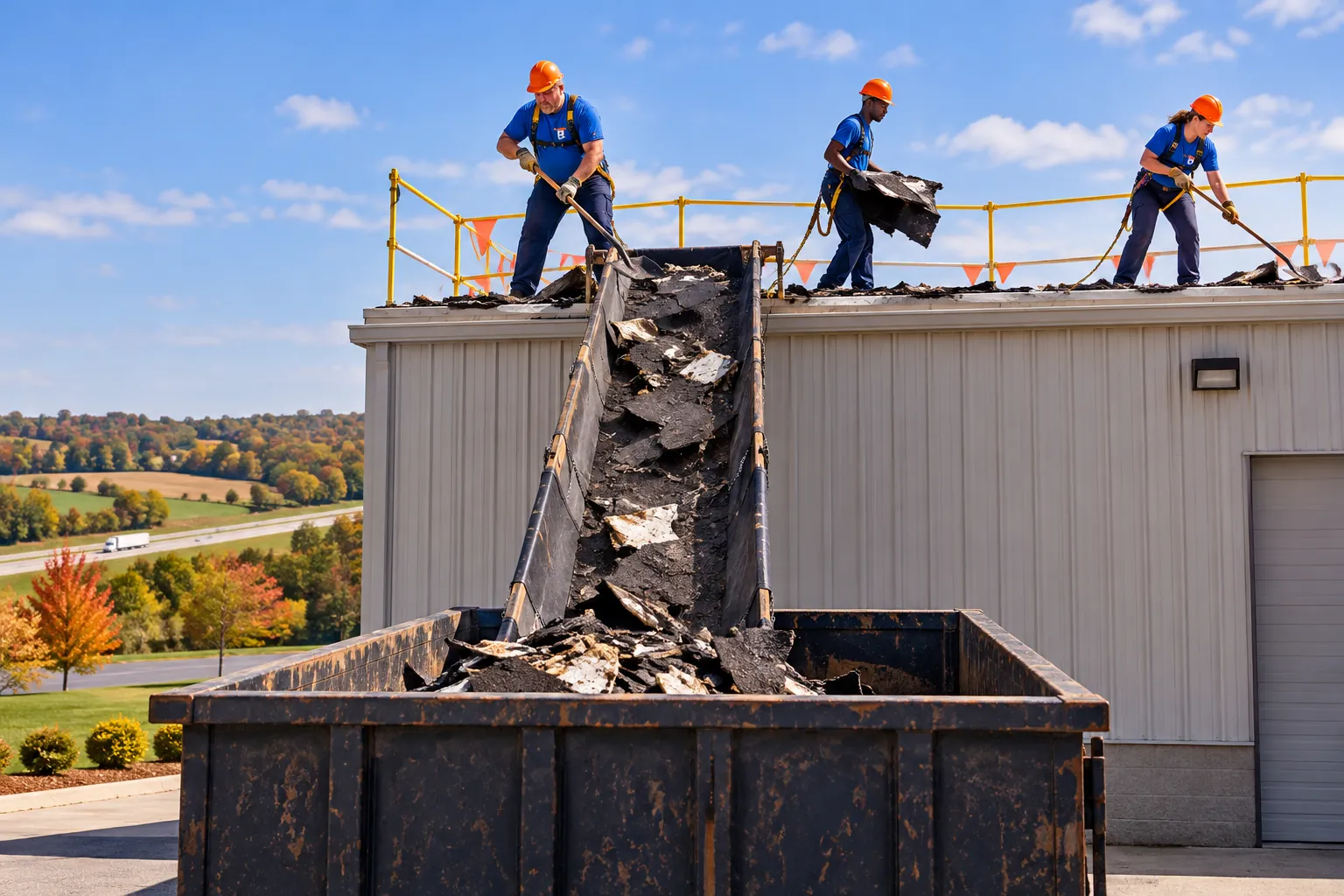
Older brick and block buildings hide their flat roofs behind parapets, which a Russellville commercial roofing contractor works around on every job. Water that cannot leave through a scupper sits against the wall, works behind the base flashing, and shows up inside along the masonry.
A replacement rebuilds that whole edge: base flashing run up the wall, a termination bar or counterflashing above it, new coping cleats, and scupper sleeves flashed into the membrane.
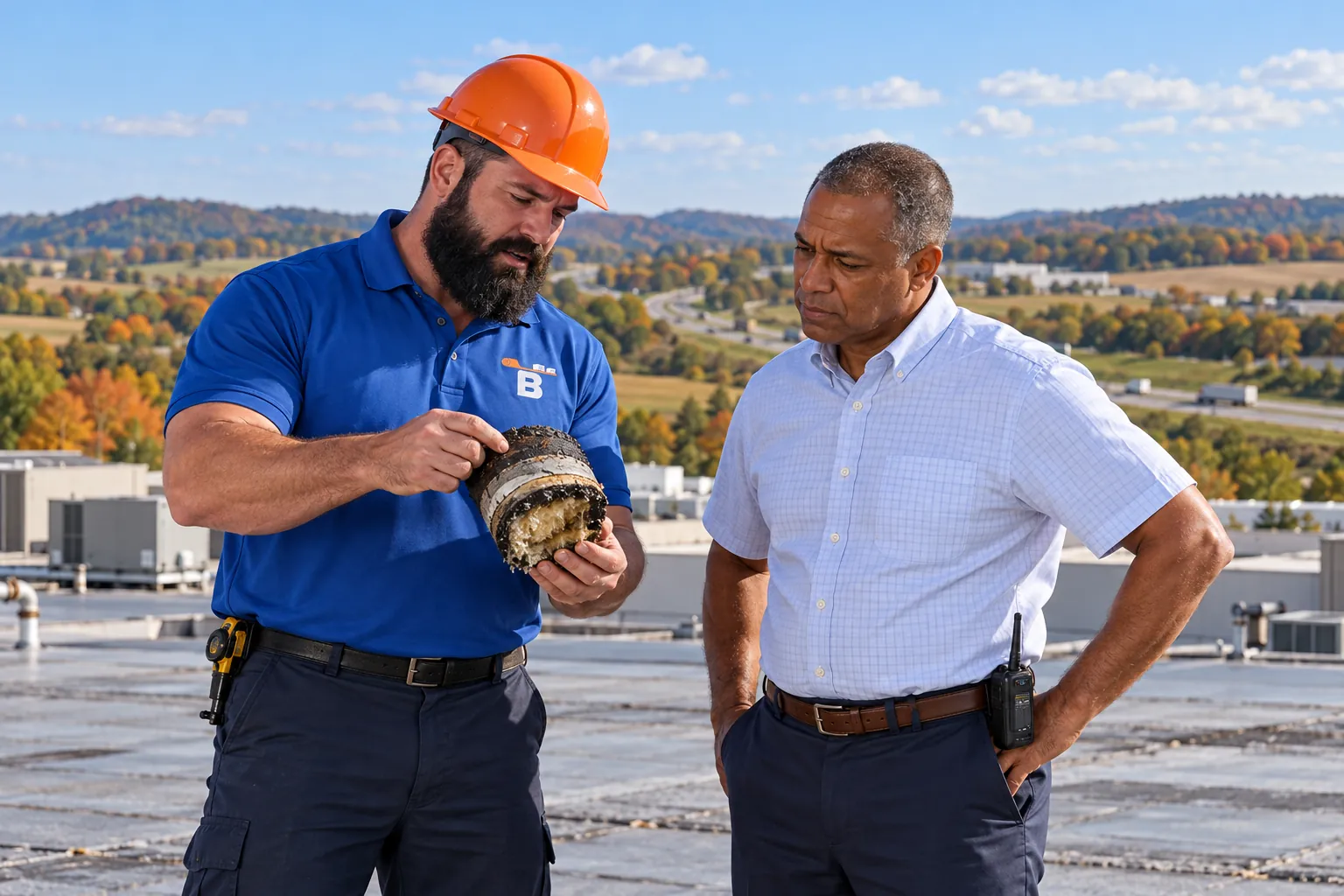
Masonry buildings show roof trouble on the walls as much as on the roof.
Dark brick under a parapet cap after rain means coping joints or cleats have opened.
Rust or algae streaks below a through-wall scupper point to a sleeve leaking into the wall.
Boxes below scuppers spilling at the top show a downspout too small or clogged for the roof behind the wall.
Leaks inside along a brick wall often come from base flashing set lower than standing water.
Paint bubbling at the top of interior walls shows moisture moving down from the parapet.
Skylight curbs on older roofs often sit lower than modern flashing heights call for.
Water held against the wall freezes overnight and pries at the flashing seam behind it.
Old curbs barely above the roof surface leave too little height to flash once insulation thickens.
Caps that slid or lifted have lost their cleats and let water straight into the wall top.
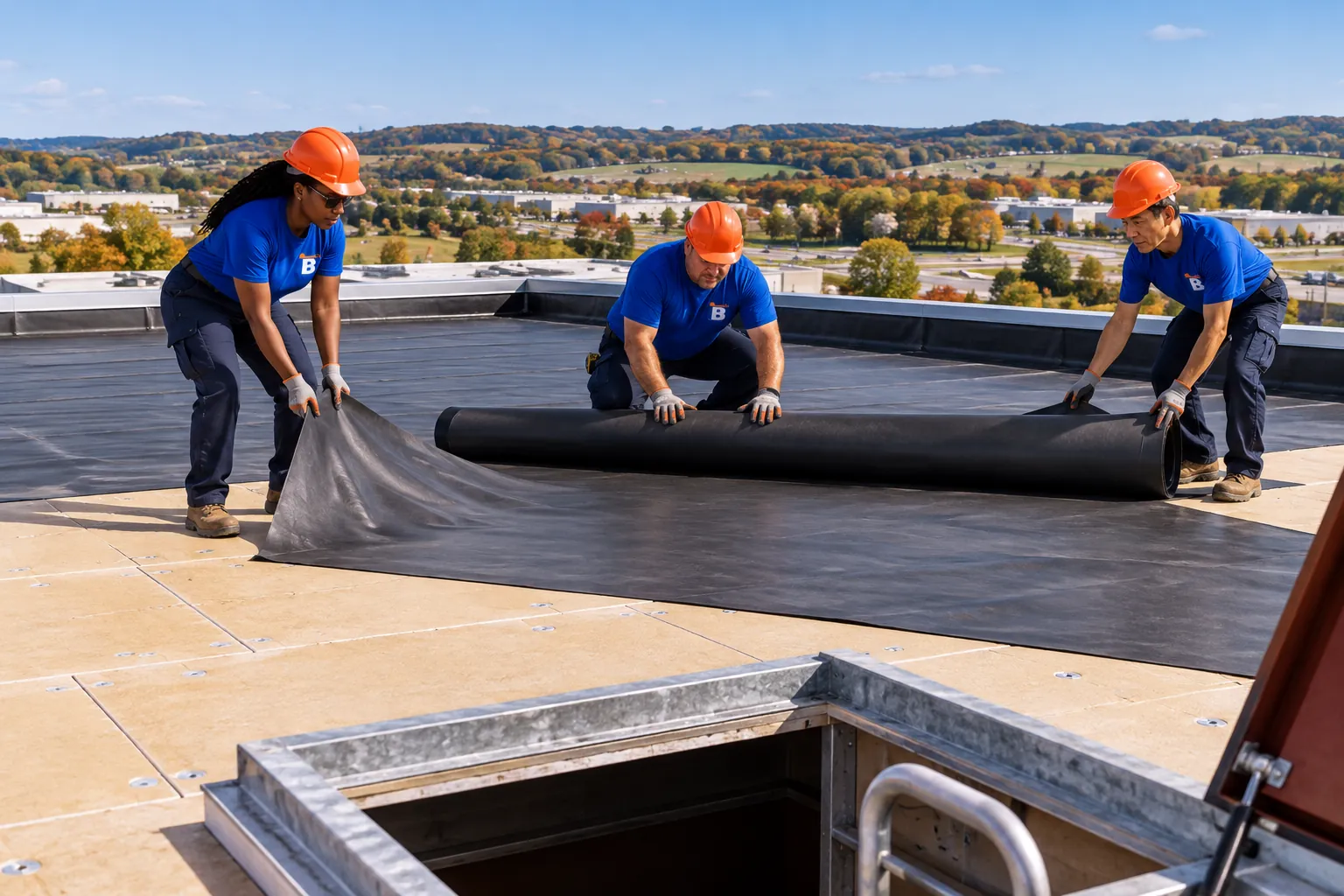
A rebuilt edge on a masonry building protects the walls as well as the roof.
Sealed coping and tall base flashing keep water out of the brick and the wall cavity.
Sized sleeves move water off the roof before it can stand against the parapet.
Extended curbs keep flashing height once tapered insulation raises the roof surface.
Stopping water at the parapet stops the paint and plaster damage along exterior walls.
Overflow scuppers set above the primary outlets carry water out if a scupper or drain clogs.
Masonry buildings get their roof system plus the edge work around it.
Tear-off, tapered insulation, and a new membrane on the roof behind the parapets. See flat roofing.
Rubber sheet with flashing run up each wall suits many older flat roofs. See EPDM roofing.
New coping, cleats, termination bars, and counterflashing around the whole perimeter.
Sleeves, conductor heads, and overflow scuppers through the parapet where drains run short.
Curbs raised to clear tapered insulation, with HVAC plans filed with the Building Official first.
Coping joints and base flashing repaired on roofs not yet ready for replacement.
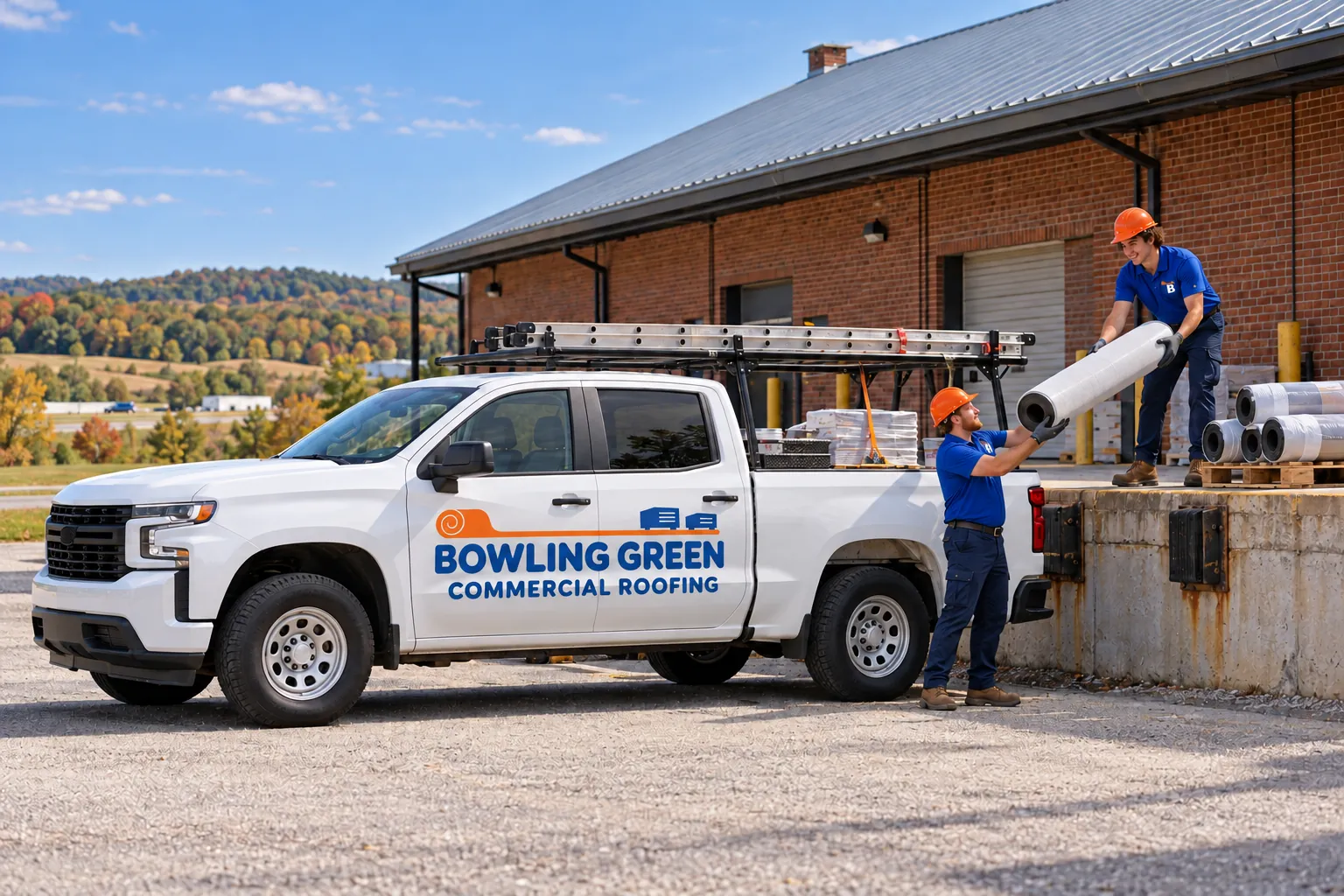
Call us with the wall location and what the parapet above it looks like. Coping and base flashing are where we start.
Parapet buildings add edge work and an HVAC plan step to the usual order.
We walk the roof and every parapet, check coping joints and scupper sleeves, and measure curb heights against the new roof.
If units move or curbs need extensions, the HVAC plans go to the Building Official before anything is set.
Tear-off, tapered insulation, and membrane go on in sections, with base flashing run up each wall.
Scuppers and overflows get run with a hose before the job closes, so water leaves the roof where planned.
Termination bars, counterflashing, coping on new cleats, and scupper sleeves finish the perimeter.
Is your building closer to another town? Call us or send us a message. Commercial roofs in these towns are part of our area too.
72,294
Residents, 2020 census
Our home base, with plant and warehouse roofs of every size.
10,176
Residents, 2020 census
Strip center roofs reworked with tenants open.
4,299
Residents, 2020 census
Ponding flat roofs converted to sloped metal.
2,505
Residents, 2020 census
Recovers that raise the roof edge height.
1,589
Residents, 2020 census
Church, school, and hall roofs on set schedules.
15,014
Residents, 2020 census
Tear-offs that clear out abandoned curbs.
2,356
Residents, 2020 census
Roofs carrying signs, lights, and conduit.
875
Residents, 2020 census
Roof replacements with deck repair first.
Also Serving
Population: 2020 U.S. census, via Wikipedia's Kentucky city list.
Russellville routes building permits through its City Building Official and applies the International Building Code to commercial work. When reroofing moves or swaps units, the Building Official signs off on HVAC plans and load calculations before the state HVAC permit is issued.
Tapered insulation raises the roof surface, and curbs need enough height above it for flashing. Extending curbs brings in the HVAC plan review, so curb heights and ductwork changes get settled during planning. A replacement that leaves units on their current curbs keeps that review off the list.
New base flashing run up the wall above the deepest ponding, a termination bar or counterflashing at the top, coping set on new cleats with sealed joints, and scupper sleeves flashed into the membrane.
Masonry repointing and rebuilding belong to a mason, and we coordinate around that work. The roof crew handles everything from the coping down to the deck so the two trades meet at a clean line.
The roof itself goes on the same way, but parapets, scuppers, and curb heights add work that a low-edge building skips. Expect the perimeter to be a large part of the scope.
Note where water shows inside, check the coping for open joints from the ground, and look at the wall below each scupper after rain. Photos of those spots help us plan the roof walk.
Usually. Old scupper sleeves rarely line up with the new roof surface, and corroded ones leak into the wall. New sleeves are set at the new height, flashed into the membrane, and paired with conductor heads sized for the roof area behind them.
Tell us about the building and its parapets. We check the edge, the curbs, and the roof, then lay out the work.
Want Us To Call You About Your Roof?
Leave a name and number. Prefer to talk now? Call (364) 205-6781.